Roof rat attic trapping and mechanical exclusion in Phoenix demands an engineering-based approach tailored to Sonoran Desert conditions. Unlike native desert pack rats, roof rats (Rattus rattus) exploit elevated…
Roof rat attic trapping and mechanical exclusion in Phoenix demands an engineering-based approach tailored to Sonoran Desert conditions. Unlike native desert pack rats, roof rats (Rattus rattus) exploit elevated transit routes, nesting within interior attic insulation after traveling along utility lines, fan palm fronds, and mature citrus canopies. In irrigated Phoenix neighborhoods such as Arcadia, North Central Phoenix, and the Biltmore Area, unharvested grapefruit and Seville oranges provide year-round hydration that sustains large urban rodent populations. Once these rodents access roof planes, they enter attic spaces through unprotected barrel tile eaves, dormer roof returns, plumbing vent pipe stacks, and AC chase penetrations. Standard retail sprays and exterior chemical bait boxes routinely fail to resolve indoor nesting sites; poisoned rodents frequently crawl deep into drywall voids or insulation layers to die, causing severe biological odor issues and secondary dermestid beetle infestations in desert heat exceeding 105 degrees Fahrenheit.
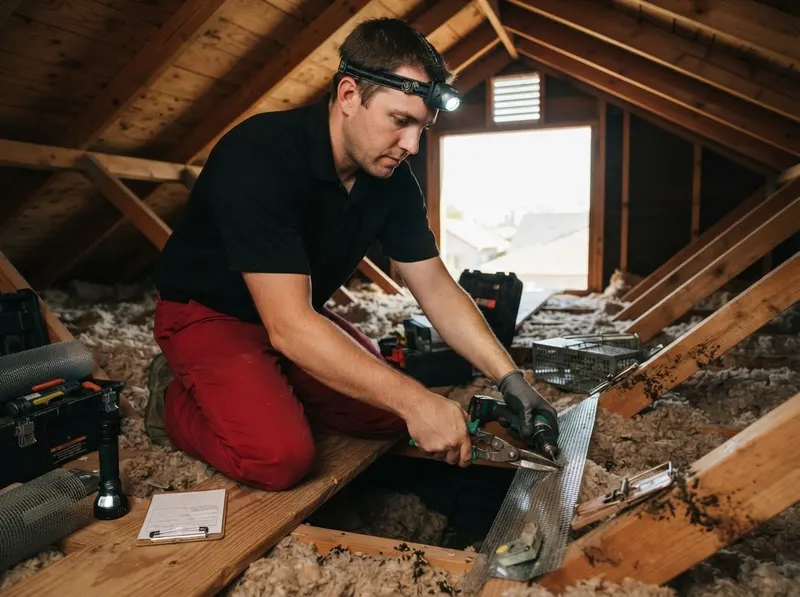
Halvoro Pest Patrol executes structural defense through rigid physical separation rather than chemical dependence. The process begins with complete architectural sealing: technicians mechanically close all structural vulnerabilities across the roofline and foundation using 1/4-inch galvanized 19-gauge steel hardware cloth, metal flashing, and industrial sealants. This physical threshold prevents any animal larger than a half-inch from entering. For existing interior infestations, technicians establish mechanical trapping grids directly along observed attic runway trails and wall top-plates. Because rodents are naturally neophobic, these mechanical snap traps are calibrated and monitored through sequential site visits until every individual inside the structural envelope is extracted.
Decision guidance depends strictly on the structural boundary of the infestation. If rodent activity remains confined to outdoor citrus trees, perimeter sanitation and exterior ground-station management are sufficient. If scratching sounds, chewed electrical wiring, or droppings are detected inside the attic or ceiling drywall, mechanical exclusion and interior attic trapping are required immediately. Exterior baiting alone is counterproductive when roof rats have already established internal nesting cavities. Property owners in Ahwatukee Foothills, Desert Ridge, Norterra, Willo Historic District, Maryvale, and Alhambra facing roofline intrusions can schedule a physical evaluation by phone at (520) 652-3699.
Every job gets a firm, written price after a free on-site visit.
Tell us about your roof rat attic trapping and mechanical exclusion job in Phoenix and we'll send a clear, written quote, usually the same day.
 Halvoro Pest Patrol