Municipal drainage infrastructure throughout Maricopa County creates subterranean corridors for American cockroaches, commonly identified as sewer roaches. During peak summer conditions above 105 degrees Fahrenheit,…
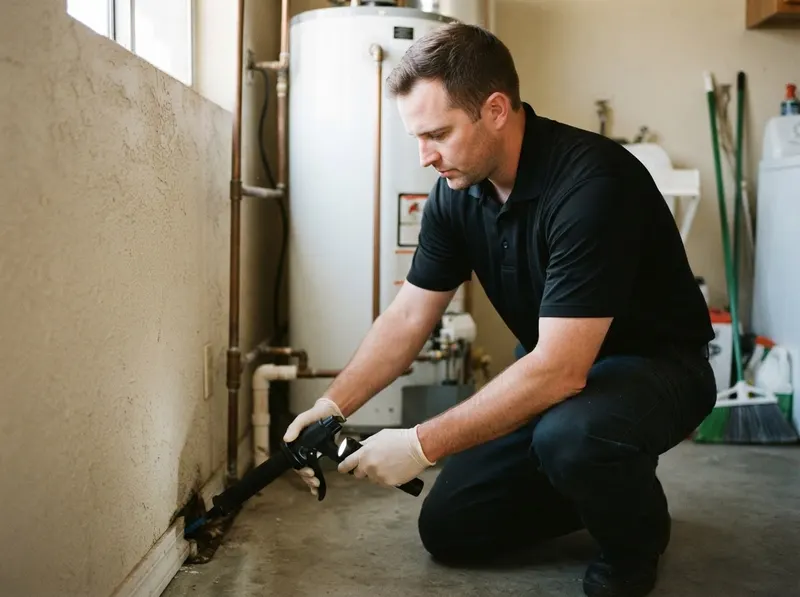
Municipal drainage infrastructure throughout Maricopa County creates subterranean corridors for American cockroaches, commonly identified as sewer roaches. During peak summer conditions above 105 degrees Fahrenheit, rising soil temperatures push these populations upward out of city sewer mains, municipal manholes, and residential water meter vaults into ground-level living spaces. Properties bordering established flood irrigation channels in Arcadia and North Central Phoenix or historic brick foundations in the Willo Historic District experience routine ingress through dry p-traps, worn plumbing escutcheons, and unsealed perimeter cleanout caps. Mechanical exclusion forms the primary barrier: replacing weathered threaded caps on 3-inch and 4-inch PVC sewer cleanouts halts exterior entry vectors before chemical measures are deployed.
Outdoor desert species, such as the invasive Turkestan cockroach (Blatta lateralis), establish exterior nesting populations beneath decorative river rock, dense mulch, and expansion joints around hardscapes in Desert Ridge, Norterra, and the Ahwatukee Foothills. Routine retail surface sprays break down within days under ultraviolet radiation and sustained desert ground heat exceeding 140 degrees Fahrenheit. Halvoro Pest Patrol deploys ultraviolet-stable, microencapsulated suspensions alongside granular insect growth regulators to disrupt subterranean reproductive cycles without saturating living spaces. Technicians licensed under the Pest Management Division of the Arizona Department of Agriculture execute targeted applications directly within subterranean junction points rather than broadcasting indiscriminate chemical residues across open yards.
Selecting structural remediation fits scenarios where large, winged roaches emerge directly from bathtub drains, sinks, or slab expansion joints after irrigation events. In contrast, indoor German cockroach (Blatella germanica) infestations require specialized food-handling bait matrices and interior cabinet voids rather than perimeter drain flushes. For sewer roach activity, the operational trade-off centers on treatment depth: topical aerosol sprays knock down visible wandering adults for several hours but leave sewer lateral populations intact, whereas specialized pressurized bio-foam remediation scours organic biofilm within secondary plumbing lines to remove harborage entirely. Halvoro Pest Patrol operates with straightforward, service-by-service pricing with zero recurring subscription requirements.
Every job gets a firm, written price after a free on-site visit.
Tell us about your desert cockroach and sewer roach remediation job in Phoenix and we'll send a clear, written quote, usually the same day.
 Halvoro Pest Patrol