Bed bug thermal and structural remediation addresses the physiological limits of Cimex lectularius within desert residential architecture. In Maricopa County, high ambient temperatures cause indoor colonies to seek…
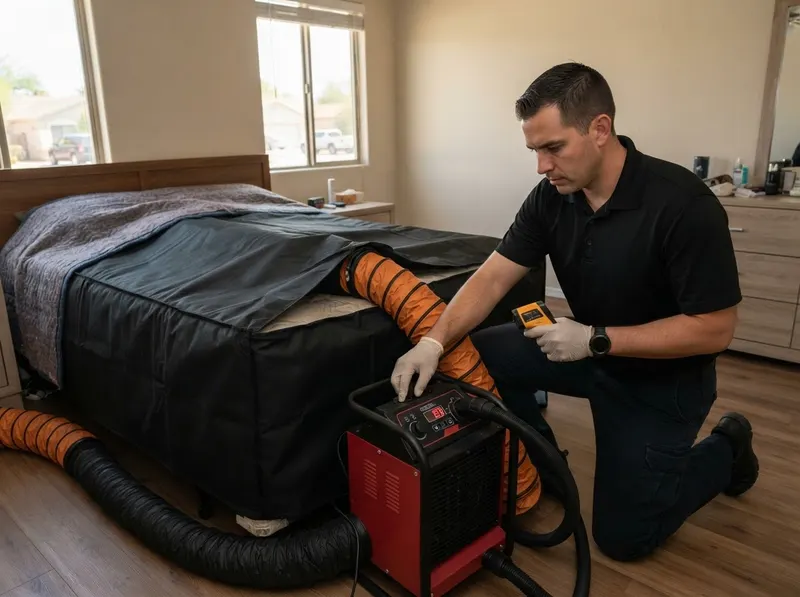
Bed bug thermal and structural remediation addresses the physiological limits of Cimex lectularius within desert residential architecture. In Maricopa County, high ambient temperatures cause indoor colonies to seek harborage inside structural framing, baseboards, and electrical chases. While retail pyrethroid sprays frequently fail due to widespread insect nerve insensitivity, sustained convective heat at 122°F denatures internal proteins across all insect life stages within minutes. Industrial heaters circulate heated air throughout the building, elevating mattress interiors, wall interiors, and upholstered furniture cores to between 120°F and 135°F. Structural thermal remediation prevents pest escape into adjacent rooms by pairing positive air pressure with amorphous silica dust barriers applied inside wall switch plates and carpet tack strips.
Thermal remediation fits single-family block homes in Maryvale, multi-story stucco builds in Ahwatukee Foothills, and historic lath-and-plaster structures in the Willo Historic District where liquid chemicals cannot penetrate deep wall cavities. The operational trade-off is mechanical prep: thermal remediation requires homeowners to relocate heat-sensitive possessions, whereas liquid chemical applications require multiple visits over 30 days without heat displacement. In dense subdivisions like Desert Ridge, Norterra, and Alhambra, thermal work eliminates the need for repeated chemical exposures inside sleeping areas. In sprawling custom homes in Arcadia, North Central Phoenix, and the Biltmore Area, equipment deployment is calibrated according to electrical draw, ceiling heights, and air volume.
Field execution relies on verifiable metrics regulated under the Pest Management Division of the Arizona Department of Agriculture. Calibrated wireless sensors record internal temperatures in structural voids and dense fabric clusters to verify that the core reaches 122°F for a minimum of 60 continuous minutes. This non-chemical physical action destroys desiccation-resistant eggs that survive standard chemical applications. Halvoro Pest Patrol operates without long-term recurring service contracts, focusing mechanical heat directly against structural harborage vectors.
Every job gets a firm, written price after a free on-site visit.
Tell us about your bed bug thermal and structural remediation job in Phoenix and we'll send a clear, written quote, usually the same day.
 Halvoro Pest Patrol