Halvoro Pest Patrol delivers precision-engineered barrier applications and exclusion tactics designed specifically for extreme desert climates. Our licensed technicians eliminate severe infestations across the Valley of the Sun through data-backed integrated pest management instead of generic broadcast chemical sprays.
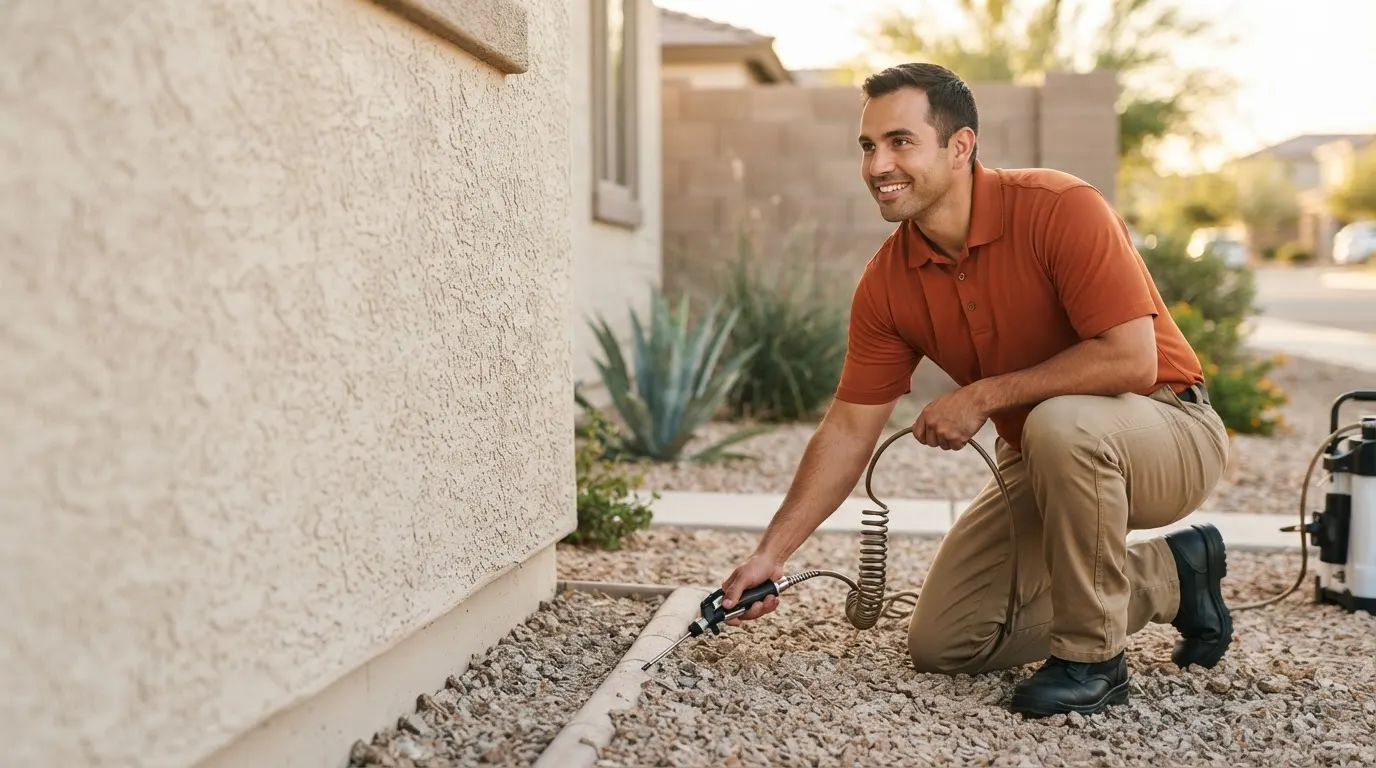
A professional pest control service in Phoenix is a targeted barrier management and structural remediation protocol designed to eradicate desert scorpions, subterranean termites, venomous arachnids, and destructive rodents from residential and commercial structures across Maricopa County.
Every service reflects the same meticulous attention to detail, whether it's a single job or a larger pest control sevice project across Phoenix.
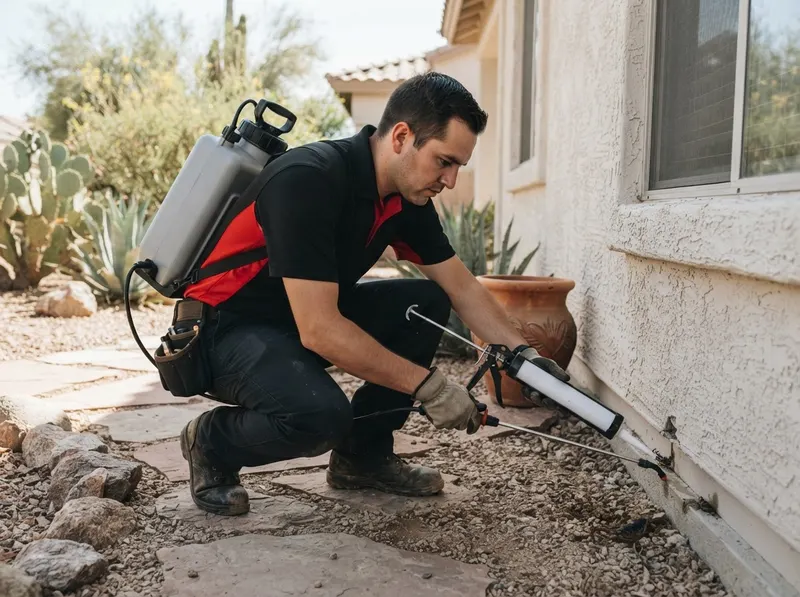
Sonoran bark scorpions exploit structural entry voids as narrow as 1/16th of an inch. Our technicians apply heat-stable microencapsulated pyrethroids along stem walls and weep screeds, blow synthetic dust into exterior block-wall expansion joints, and systematically seal exterior utility penetrations. This double-layer defense eliminates the food supply, specifically crickets and roaches, while arresting scorpions before they breach bedrooms and nursery areas. Field applications focus heavily on the base of perimeter block fences, expansion joints in concrete flatwork, and weep screeds along stucco framing. Technicians introduce electro-charged micronized dust deep into wall voids through exterior switch boxes and plumbing penetrations. Because bark scorpions seek dark, temperature-stable crevices during daytime hours, this deep-void application delivers lethal active agents directly to harborage sites without exposing interior living spaces to liquid chemicals. Exterior barrier bands extend 3 feet up the vertical foundation and 6 feet outward across surrounding gravel or pavers to intercept foraging arachnids.
Get a quote →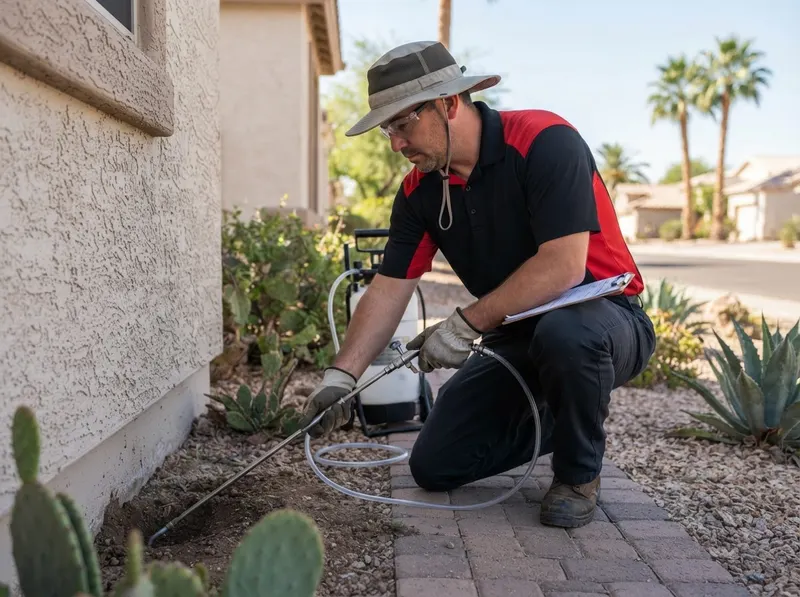
Heterotermes aureus colonies thrive deep in desert soils, constructing subterranean mud tubes along foundation stem walls to access structural framing. Technicians trench the foundational soil footprint, drill interior slab joints where plumbing enters through concrete, and inject high-yield non-repellent termiticide. The foraging termites unknowingly carry the active compound back to subterranean reproductives, collapsing the entire colony network within 90 days. Soil treatments require digging continuous 6-inch by 6-inch trenches directly adjacent to exterior foundation walls, applying termiticide mixtures at calibrated label volumes of 4 gallons per 10 linear feet. In attached patio slabs, driveways, and garage returns, technicians utilize diamond-tipped rotary hammer drills to create vertical injection ports spaced exactly 12 inches apart. Pressurized sub-slab rods introduce liquid termiticide into the compromised soil layer underneath concrete, forming an unbroken chemical barrier that binds tightly to soil particles. Every drilled injection port is patched flush with commercial-grade hydraulic cement matched to existing concrete coloration.
Get a quote →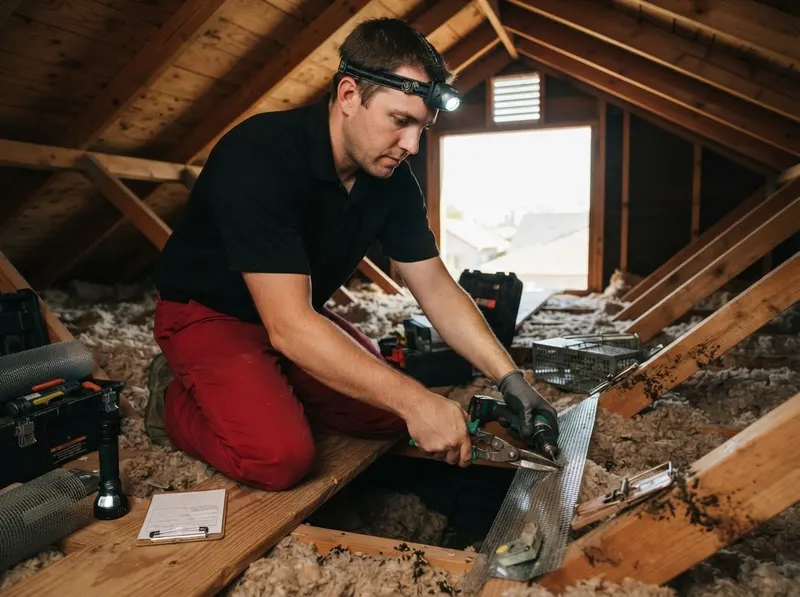
Roof rats exploit Valley fruit trees, oleanders, and tile roofing returns, chewing attic wiring and insulation. Our technicians install 1/4-inch galvanized hardware cloth over roof vents, seal eaves, and deploy mechanical trap lines inside attic spaces for rapid population removal. We avoid broadcast rodenticides indoors, preventing odor issues from concealed decay and eliminating secondary poisoning hazards for desert wildlife. Structural inspection begins along the perimeter roofline where Spanish barrel tiles create natural entry gaps between decking and fascia boards. Crews custom-cut and rivet galvanized steel wire mesh across attic dormers, gable vents, and J-vents, eliminating primary arterial access routes. Interior attic runways are mapped out to establish targeted mechanical snap-trap runs across primary wooden framing members. Traps are monitored and reset across systematic inspection intervals until zero population activity is recorded, followed by complete removal of biohazardous droppings and localized sanitation of pheromone-marked pathways.
Get a quote →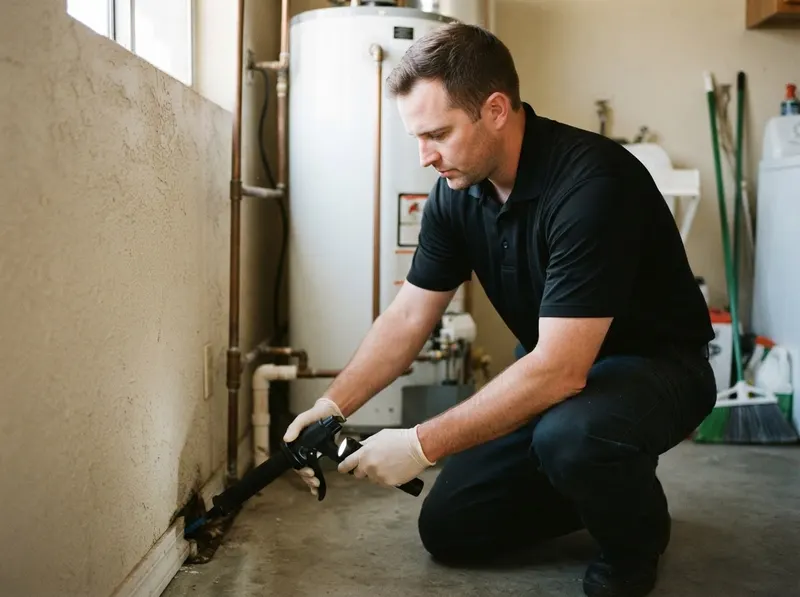
American and Turkestan cockroaches surge through municipal storm drains and water meters during summer triple-digit heat waves. We apply long-lasting insect growth regulators and water-resistant non-repellent baits directly into exterior valve boxes, perimeter turf borders, and utility junctions. This suppresses rapid breeding cycles and stops heavy migrations across patio sliders and garage thresholds. High-moisture microclimates created by automated landscape drip systems, decorative rock gardens, and valve manifolds serve as primary reproductive nurseries for Turkestan roaches across Maricopa County. Technicians deploy weather-resistant granular baits formulated with hydramethylnon or indoxacarb into irrigated rock beds, water meter vaults, and perimeter planters. Interior plumbing chases, laundry drain lines, and kitchen utility penetrations receive targeted micro-injections of non-repellent insect growth regulator compounds. This interrupts chitin synthesis in developing nymphs, rendering them sterile and halting generational recruitment without generating foul chemical odors inside residential quarters.
Get a quote →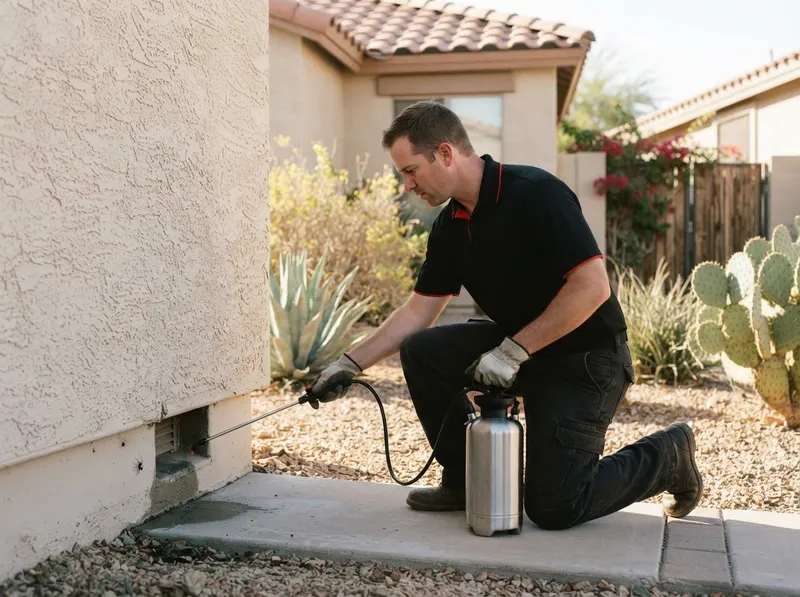
Venomous desert arachnids nest in block wall crevices, irrigation valve boxes, and garage corners. Our operators conduct high-pressure web de-webbing, apply direct contact botanicals, and inject residual dust into sheltered voids where crawling insects congregate. Removing foundational web networks interrupts prey capture and eradicates egg sacs before secondary summer blooms hatch. Southern black widows routinely exploit perimeter block fences, outdoor gas meter enclosures, storage sheds, and pool equipment pads across suburban Phoenix properties. Specialized extension poles equipped with structural dusting brushes physically clear dense web matrices while simultaneously applying wettable powder barriers directly to irregular wall angles. Technicians inject microscopic silica aerogel or synthetic pyrethroid dust into subterranean irrigation boxes and masonry voids, eliminating unseen adult females and desiccating silken egg sacs before spiderlings disperse across backyard recreation zones.
Get a quote →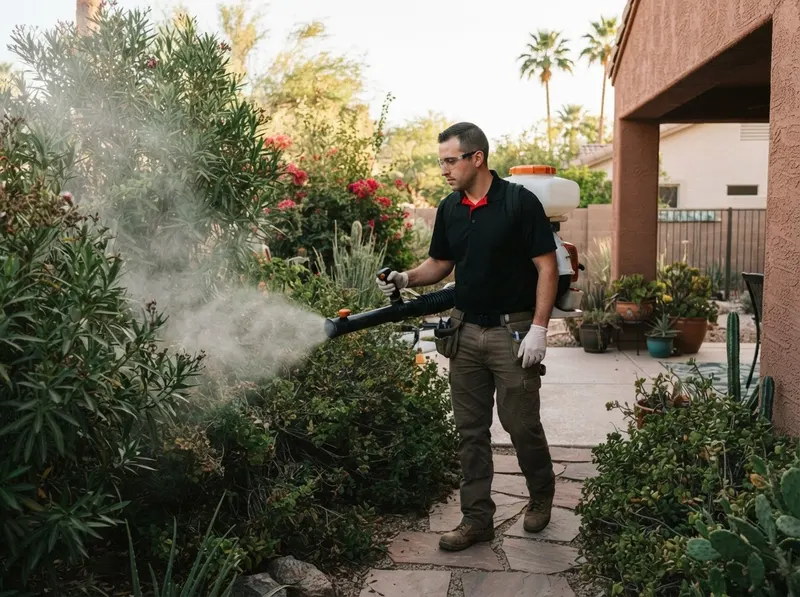
Flash rain events generate stagnant breeding water in low-lying landscape basins, gravel pits, and unmaintained drainage runs. Our technicians apply water-activated microbial larvicides to pooled exterior water sources and distribute microencapsulated adulticides across the undersides of dense foliage and patio eaves. This two-phase knockdown curbs adult biting pressure and stops larval emergence for up to 30 days. Desert storms deposit sudden moisture that overwhelms dry washes, retention basins, and catch basins, establishing breeding nurseries for Culex and Aedes mosquito vectors. Crews utilize calibrated motorized backpack mist blowers to apply microencapsulated pyrethroid adulticides into resting zones located deep within dense hedges, citrus groves, boundary oleanders, and covered patio overhangs. Concurrently, slow-release biological briquettes containing Bacillus thuringiensis israelensis (BTI) are introduced into standing drainage channels, French drains, and uncirculated fountain basins to destroy mosquito larvae before adult pupation occurs.
Get a quote →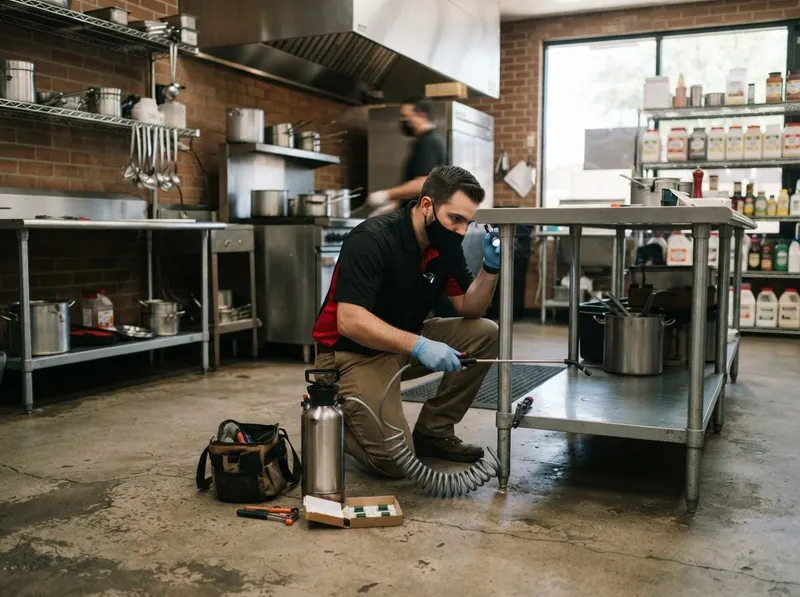
Commercial properties, dining facilities, and warehouse spaces face strict regulatory scrutiny regarding stored-product and moisture pests. Halvoro Pest Patrol deploys commercial-grade pheromone monitoring, mechanical door sweeps, crack-and-crevice baiting, and digital logbook documentation. Operations conform to Arizona agricultural regulatory standards, securing supply chains without continuous operational disruption. Food service facilities and logistics hubs require structural compliance devoid of airborne contaminants or non-targeted broadcast sprays. Our technicians map insect migration trajectories using species-specific pheromone sticky monitors across loading docks, storage shelving, and dishwashing corridors. Service protocols prioritize void treatments around refrigeration line chases, stainless steel prep stations, and dry-storage pallet zones using non-volatile gel baits and insect growth regulators. Comprehensive service logs, safety data sheets, and digital trend analyses are maintained to satisfy county environmental health audits and third-party food safety compliance inspections.
Get a quote →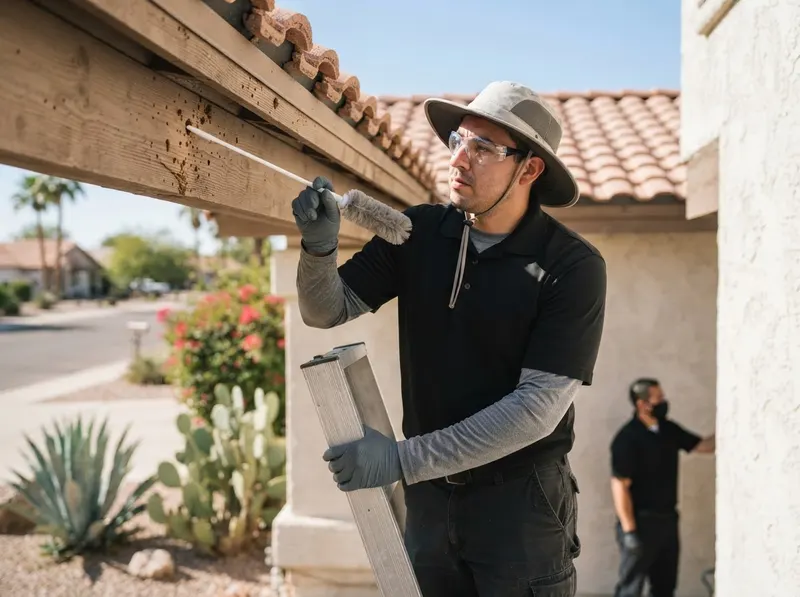
Aggressive paper wasps, Africanized honeybees, and carpenter bees build nests in porch soffits, block walls, and patio beams. Licensed technicians utilize non-flammable thermal airdusters and directional contact sprays to neutralize airborne stinging hazards safely. Technicians physically remove nests, scrape residual pheromone footprints, and seal void entrances to prevent future colony re-establishment. Desert paper wasps and feral honeybees frequently build nesting clusters beneath second-story stucco eaves, tile roof returns, and hollow architectural columns. Operators deploy targeted foaming applications and specialized extension equipment to knock down active stinging insect populations from ground level without damaging exterior architectural coatings. Following complete colony neutralizations, operators thoroughly scrape away attachment footings, neutralize territorial pheromones with enzymatic washes, and patch wall openings with silicone sealants or metal mesh to stop opportunistic swarms from occupying the identical wall void.
Get a quote →You get a firm, itemized quote for your pest control sevice before any work begins, no surprises, no pressure.
Careful prep, tidy work, and a full cleanup when we are done. We treat your home and belongings like our own.
The same trusted, background-checked team from the first call to the final check.
Property owners facing desert pest invasions require solutions matched precisely to pest biology, construction styles, and micro-climates. If the issue involves Arizona bark scorpions entering living areas through baseboards and weep screeds, choose an intensive physical exclusion package paired with microencapsulated pyrethroids and weep screed dusting; if the issue involves Western subterranean termites chewing structural studs behind drywall, choose a non-repellent soil drench and localized sub-slab injection protocol. The trade-off centers on primary delivery mechanics and treatment zones: scorpion exclusion demands extensive mechanical sealing of outer masonry, expansion joints, and stucco gaps, whereas termite remediation targets the concealed subterranean perimeter beneath concrete pads and foundational soil.
For property managers dealing with roof rats navigating citrus canopies and attics, structural exclusion through metal mesh installation paired with snap-trap deployment outperforms exterior chemical baiting; chemical rodenticides risk secondary toxicity to native raptors and fail to prevent carcasses from decaying within crawlspaces. Selecting single-service knockdown sprays delivers immediate relief for visible crickets or roaches but leaves structural voids vulnerable to migrating arachnids within 30 days; committing to a bi-monthly perimeter defense program maintains steady chemical barriers against persistent migrations without forcing clients into locked multi-year service contracts. If managing an established multi-unit residential property with widespread German cockroach activity, select systemic baiting rotations paired with insect growth regulators instead of liquid perimeter residual barriers; liquid barriers scatter roach populations deeper into interior partition walls, whereas non-repellent baits leverage colonial aggregation behaviors to achieve total colony collapse inside pipe chases.
When handling seasonal desert invaders like pale windscorpions or crickets, opting for landscape-level granular treatments provides wide buffer perimeters across crushed granite yards, whereas localized foundation sprays leave open approach avenues across untreated xeriscaping. The functional balance always dictates pairing targeted mechanical exclusion with chemical residual longevity to prevent re-entry cycles across the hot summer months.
Every project gets a firm, written price after a free on-site visit. Ranges below for orientation.
Tell us about your pest control sevice job and we'll send a clear, written quote, usually the same day. Or just call and talk to a real Phoenix pro.
(520) 652-3699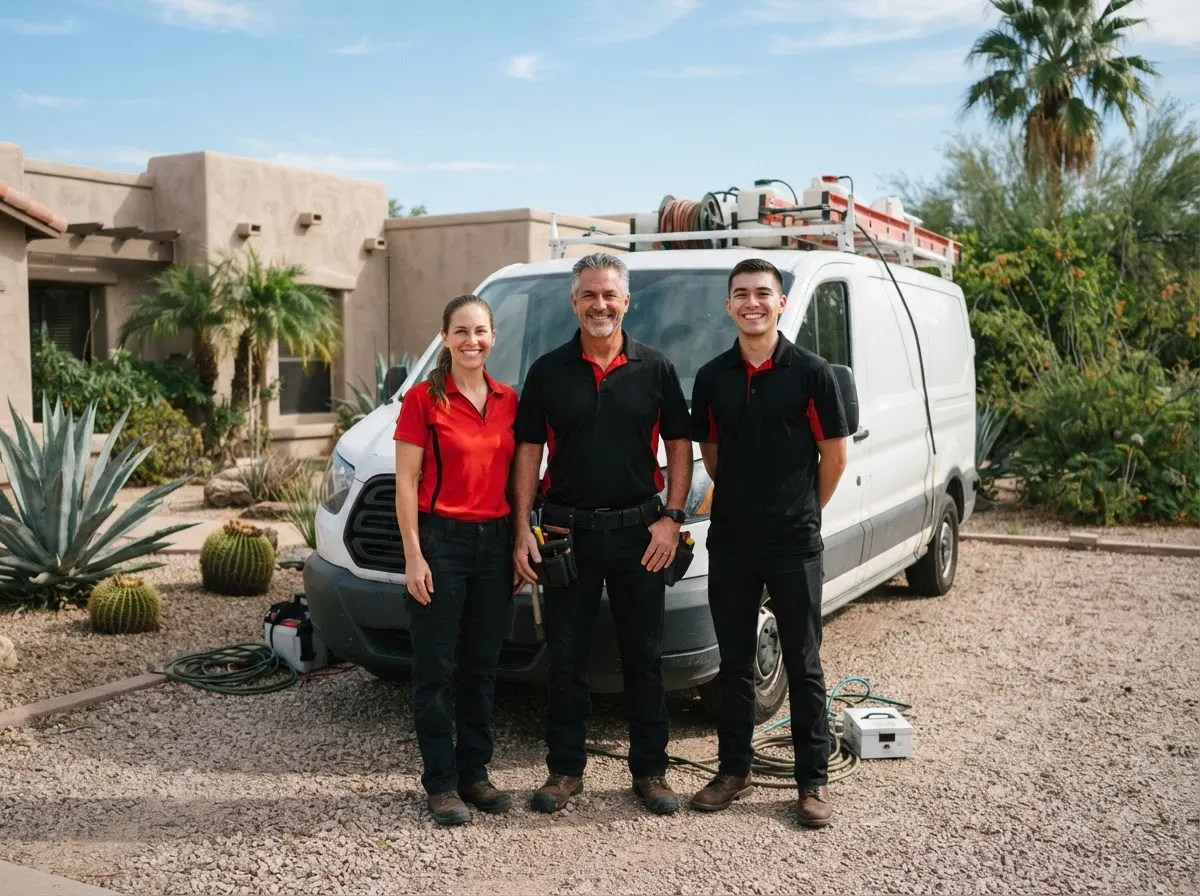
Phoenix properties face unique pest migration vectors driven by intense desert heat, block-wall construction, and regional irrigation patterns. Properties near South Mountain Park and Preserve or Camelback Mountain frequently encounter heavy bark scorpion pressures as desert washes dry out in May, pushing predatory arachnids toward irrigated residential turf. In historic neighborhoods like the Willo Historic District, aging crawlspaces and dense citrus canopies support chronic roof rat colonies, while the expansive flood irrigation throughout North Central Phoenix creates severe Turkestan cockroach reservoirs along street curbs. Properties situated in northern developments like Norterra and Desert Ridge border pristine desert washes where desert mule deer and javelina movements stir up native tick and flea populations that migrate across residential property lines. Furthermore, residential blocks lining Indian School Road, Camelback Road, and the Central Avenue corridor often feature legacy homes constructed with wood framing built directly over unsealed concrete foundations, establishing ideal sub-slab access corridors for subterranean termites. Halvoro Pest Patrol aligns every treatment protocol with compliance guidelines governed by the Pest Management Division - Arizona Department of Agriculture, ensuring all chemical handling and barrier exclusions withstand extreme UV degradation.
Free estimates for Phoenix & the surrounding area.
 Halvoro Pest Patrol